The Life That Worked and Still Broke You
On doing everything right and feeling nothing
On doing everything right and feeling nothing
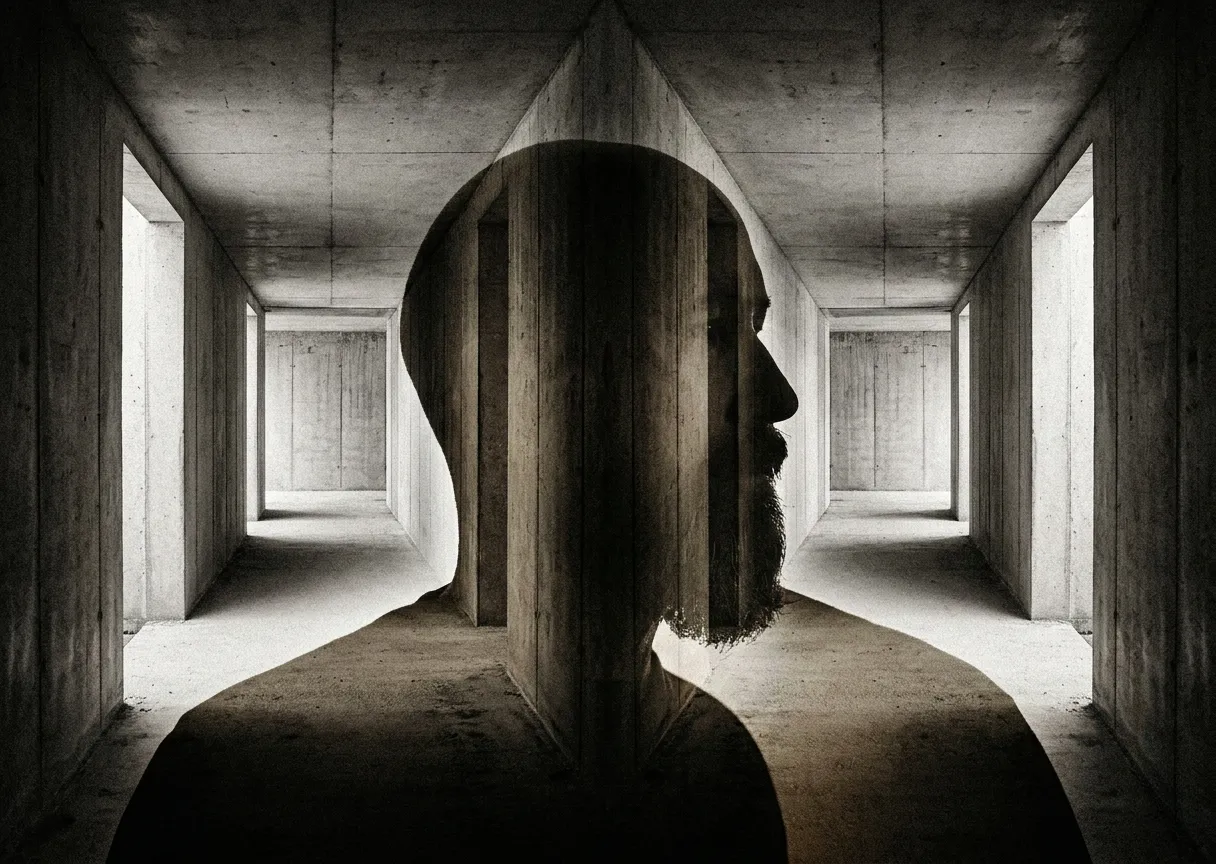
The life works. That’s the first thing. The life works and that has to be established before anything else because without it the rest sounds like self-pity and it isn’t self-pity, it’s something else, something that doesn’t have a name yet, or has too many names, none of which fit. The life works. The bills get paid. The fridge has food in it. The calendar is full in a way that suggests purpose. And none of it, not one part of it, connects to anything that feels like being alive.
Not depression. That gets offered early and often, the way a waiter offers water. Flat affect, loss of interest, anhedonia, there’s a questionnaire for it, ten questions, and the answers would probably hit the threshold, and the prescription would probably follow, and maybe it would help, or maybe it would sand the edges off something that isn’t an edge problem. Maybe the flatness isn’t a malfunction. Maybe the flatness is accurate. Maybe the instrument is reading correctly and the reading is: this is what it feels like when a life is working and a person is missing from inside it.
There’s no event. That’s what makes it impossible to talk about. A crisis with a cause can be spoken. A death, a divorce, a diagnosis. Language knows what to do with those. But this. This has no cause. The right things happened in the right order and produced the right outcomes and the feeling that was supposed to follow, the one that justifies the decades of compliance, the meaning that was supposed to crystallise once the structure was in place. It didn’t. It just didn’t. And there’s nothing to point at. There’s nothing to grieve. You can’t mourn the absence of something you were only ever promised implicitly, in the way a culture promises things, not in words but in structure, in the shape of the ladder and the assumption that the climbing would eventually convert into arrival.
The climbing does not convert into arrival.
Han called it self-exploitation. The modern subject as someone who has internalised the demand so completely they no longer need an external authority to enforce it. The whip is internal now, and the hand holding it is your own, and the exhaustion registers as drive, and the drive registers as identity. Ask someone what they do and the answer is not a description of labour. It’s a statement of being. The doing is the self. Remove the doing and. Well. That’s the thing nobody wants to finish that sentence. Remove the doing and what. Remove the doing and who.

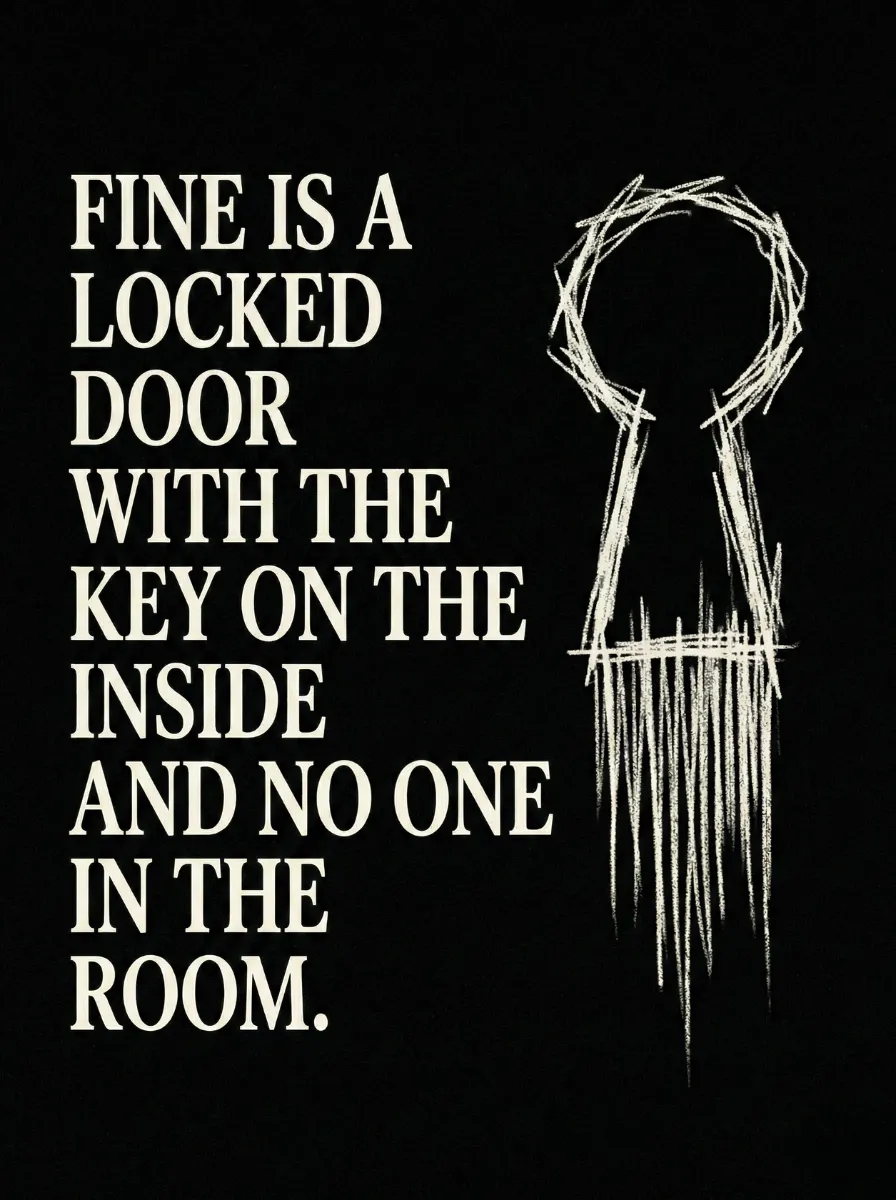
There’s a version of this that sounds liberating. Drop the expectations. Step off the ladder. Find what matters. That version circulates in books with soft covers and one-word titles, and it is, in its own way, another rung. Another thing to achieve. Be present. Be grateful. Be still. As if the person inside this hasn’t tried stillness. As if the stillness didn’t make it worse. As if sitting with it, really sitting with it, didn’t reveal that the it has no edges, no bottom, no shape that could be sat with. The whole point, the thing that refuses to be spoken, is that there is no next. There is the same. There is the same morning and the same commute and the same meetings and the same evening and the same questions about the day and the same answer, and the answer is fine, and the answer is always fine, and fine is a locked door with the key on the inside and no one in the room.
Sometimes the schedule breaks accidentally. An afternoon empties out. A meeting cancels. And into that gap comes not relief but vertigo. The momentum stops and what’s revealed is that the momentum was structural. It was holding the whole thing up. Without it, the sensation is of falling while sitting still, Kierkegaard’s dizziness of freedom except freedom is not what this is.
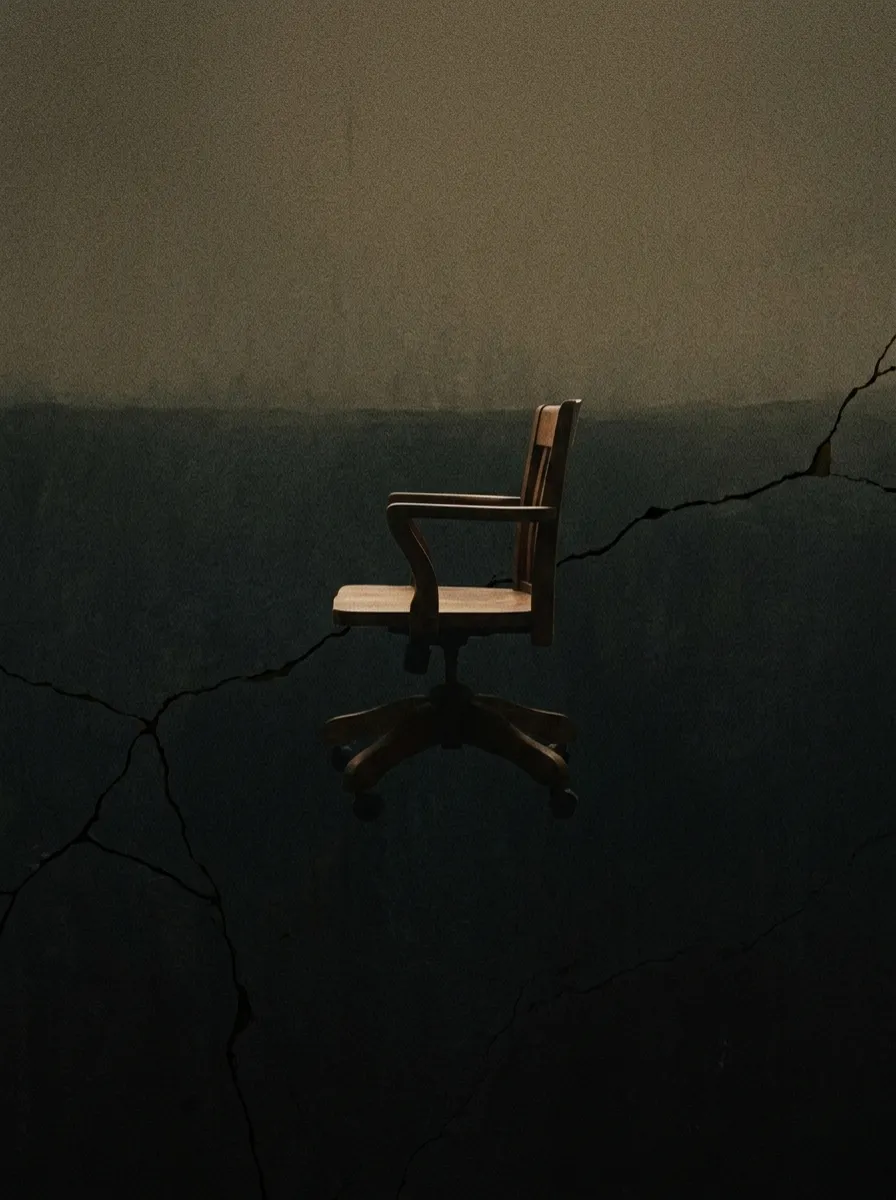
This is the discovery that the choices were never choices, not really, they were the only available options dressed in the language of choice, and the person who made them was not choosing a life but assembling one from the only parts on offer, and the assembly was so competent and so thorough that it produced something that looks, from every angle, like a life someone chose. And it is. And it isn’t. And both of those are true at the same time and neither of them helps.
Heidegger had a word for this. Thrownness. The condition of being inside a life you didn’t consent to, inside expectations that preceded your ability to understand what an expectation was. Born into a family, a class, a postcode, a set of scripts. Running before knowing you were running. The word doesn’t matter. The feeling does. The feeling is that the running worked, and the working is the worst possible outcome, because if it had failed there would be permission to stop.
The cruel thing. The specific cruelty. Is that the people who got what they wanted are not allowed to say it didn’t work. The people who followed the instructions and built the thing and arrived at the destination are the last people on earth permitted to report that the destination is empty. Because the people still climbing need the destination to exist. The whole apparatus depends on the destination existing. Somebody at the top has to be satisfied or the entire logic collapses, and so the people at the top perform satisfaction, or mistake their comfort for it, or stop asking whether satisfaction is what they feel because the question has no socially acceptable answer.
The question sits anyway. It sits in the chest. It sits in the five minutes in the car before going inside. It sits in the gap between the alarm and the feet on the floor. Sometimes it doesn’t even feel like a question. Just a weight that has no name and no opposite.
Hollow. That’s the word that keeps offering itself. But hollow implies there was something there before, that the fullness left, and that’s not right either. The suspicion, the one that can’t be said out loud because it dismantles everything, is that there was never anything there. That the structure was never a container. That it was always and only a structure, and the assumption that a life built well would eventually produce a person who felt real inside it was wrong. Not dramatically wrong. Not a catastrophe. Just wrong, in the way a postcode is wrong, in the way a Tuesday is wrong. Ordinary. Unrecoverable. And nobody catches it because the structure is the only thing holding the day together.
So the day holds together. The car starts in the morning, every morning, because what else would it do.
If this landed, you might also want to sit with The Coherence Trap, which looks at the same pressure from the other side. And there’s a longer piece on the website about how we lie to ourselves to survive the freedom we can’t face.
If this is the kind of thinking that doesn't leave when the tab closes.
Subscribe