You Were More Interesting Online
On the moment you realised the edit was better than the original and the original might be you
On the moment you realised the edit was better than the original and the original might be you
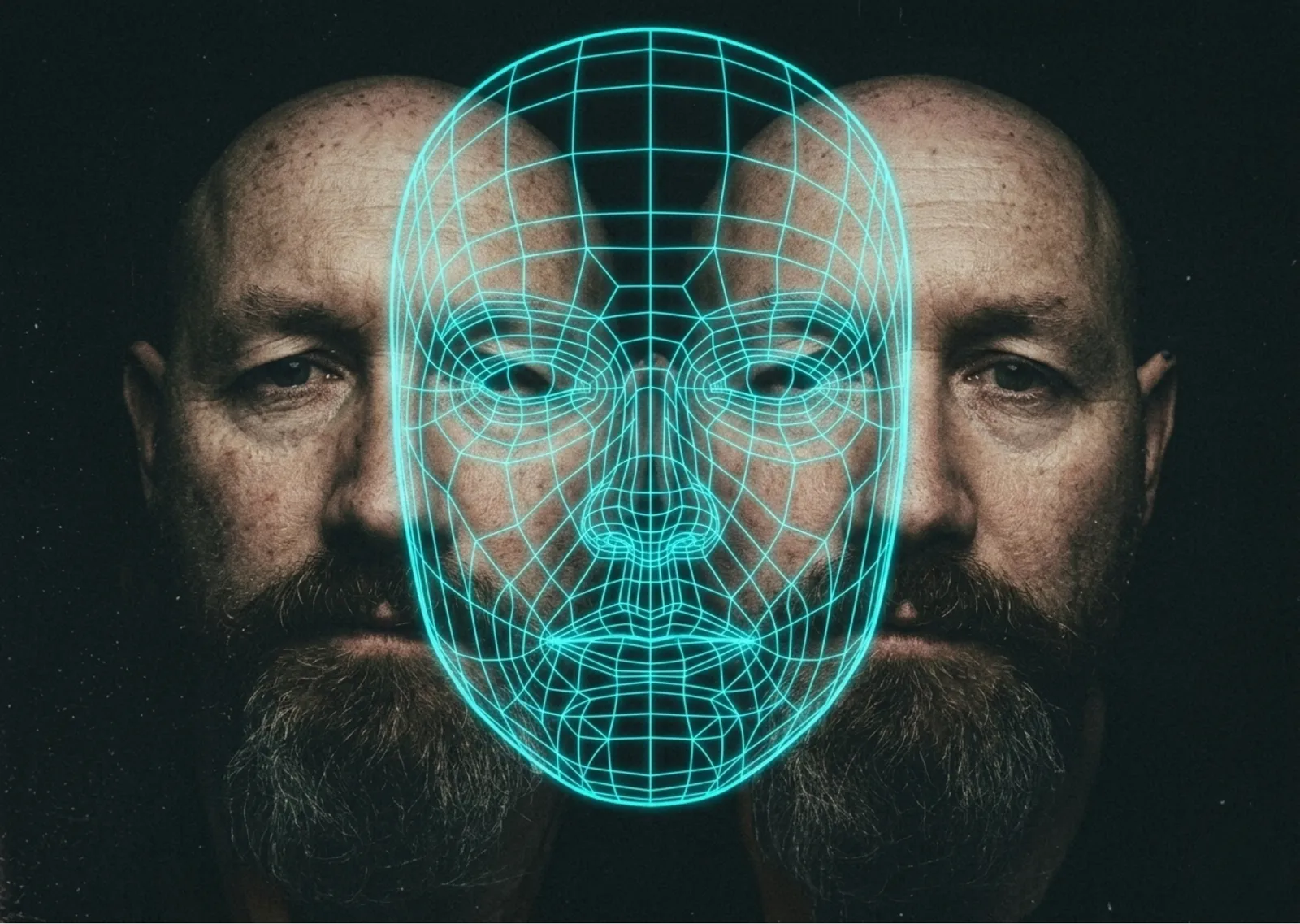
You’ve noticed it. Not in a way you’d say out loud, but you’ve noticed. The thing you built on the screen is better than you. It has a voice you can’t replicate when you’re standing in a room with your actual mouth and your actual pauses and the way you lose the thread of a sentence halfway through because someone looked at you wrong. The digital one doesn’t lose threads. It lands every time. And at some point, without anyone announcing it, the hierarchy flipped.
The edit became the original. And you became the draft.
That’s not how it’s supposed to work. The profile is supposed to be the representation and the person is supposed to be the thing being represented. But Baudrillard noticed, decades before any of this existed, that copies have a tendency to outgrow what they’re copying. He called it hyperreality. Not a false version of the real but something that has stopped needing the real altogether, something so coherent in its own right that the source material starts to look shabby by comparison. He was talking about theme parks and television. He might as well have been talking about the version of your life that gets more engagement than your life does.
And the engagement is the problem. Not because it’s addictive, though it might be, but because it’s a feedback loop that edits you without your permission. What gets a response becomes a signal about who to be. What gets silence becomes a signal about what to cut. Over months, years, the loop tightens. The self that survives the editing is leaner, sharper, more on-brand than anything you could produce in a conversation where someone can see your face thinking before your mouth catches up. And you didn’t choose this. Nobody sat you down and said: we’re going to replace you with something more optimised. It happened in the responses. In the micro-adjustments. In the slow convergence between who you are and what performs.
Debord wrote a sentence in 1967 that didn’t make full sense until about 2015. Everything that was directly lived has moved into a representation. He was describing the spectacle, his word for the condition where social life is replaced by its image. It sounded abstract until the first time you caught yourself checking whether an experience was worth posting before you’d finished having it. That moment. That specific moment where the representation became more urgent than the thing being represented. That’s what Debord was pointing at. And it wasn’t a prediction about technology. It was a diagnosis of a tendency that was already running, and technology just gave it somewhere to live at scale.
You’ve tried to close the gap. Everyone does. You try to be the edited self in the kitchen, to say the sharp thing at dinner, to carry that coherence into a room where nobody can see your drafts. But a body doesn’t let you delete the pause before the answer. A face shows the confusion before the composure arrives. And the people who know you can tell when you’re performing because they’ve seen you at 7am and the 7am self has no editorial layer. So the gap stays. And the staying is its own slow corrosion. Not dramatic. Not a crisis you could point to and name. Just the steady, ambient awareness that you are less interesting than something you made, and the something you made doesn’t need you to keep existing.
Bauman wrote about liquidity as the defining condition of modern life. Everything fluid, everything revisable, nothing holding its shape long enough to be leaned on. The digital self is the purest expression of that. Rewritable in an afternoon, responsive to what the market wants this week, unburdened by a body that ages or a biography that accumulates whether you like it or not. And the solid self, the one stuck in a skeleton that aches and a set of relationships that demand consistency, starts to feel like dead weight. You experience your own physicality as a drag on the system. That’s not a metaphor. That’s a feeling. The feeling of lying in bed at midnight, scrolling, and knowing that the scrolling feels more like participation in your own life than the lying down does.
Here is the part that has no comfortable framing. Sometimes you miss the digital self when you’re away from it. You miss it the way you’d miss someone who understood you better than the people in the room. The self that types at 11pm is more awake than the self that sat through dinner. It’s not that the typing self is fake. It’s that the typing self is what you’d be if you could edit in real time, and you can’t, and the inability feels like a deficiency that belongs to you rather than to the medium that created the comparison.
You can’t say this to anyone. It sounds like a complaint about phones. It isn’t. It’s the recognition that you are the lesser product of your own output. That the thing you made to represent you has surpassed the thing it was representing. And the surpassing didn’t feel like a loss when it happened. It felt like improvement. It felt like finally getting the phrasing right. And now the phrasing lives in someone else’s feed and you live in a kitchen where the coffee has gone cold and nobody is going to like the way you said that last thing because you said it with your actual voice, which is slower than your typing and less precise than your editing and has never once, not once, gotten the kind of reception that your posts do.
The gap doesn’t close. You adjust to it the way you adjust to a limp. After long enough you stop noticing the compensation. You stop noticing that the sharpest things you think don’t get said out loud anymore because the screen is a better venue. You stop noticing that you’ve started to live for the published version of the day rather than the day itself.
And the published version doesn’t care whether you notice or not. It’s doing fine without you.
If this is the kind of thinking that doesn't leave when the tab closes.
Subscribe