Mistaking the Algorithm for Your Taste
On the jolt of recognition when a song lands at 9:47 on a Tuesday and the feed has been there first
On the jolt of recognition when a song lands at 9:47 on a Tuesday and the feed has been there first
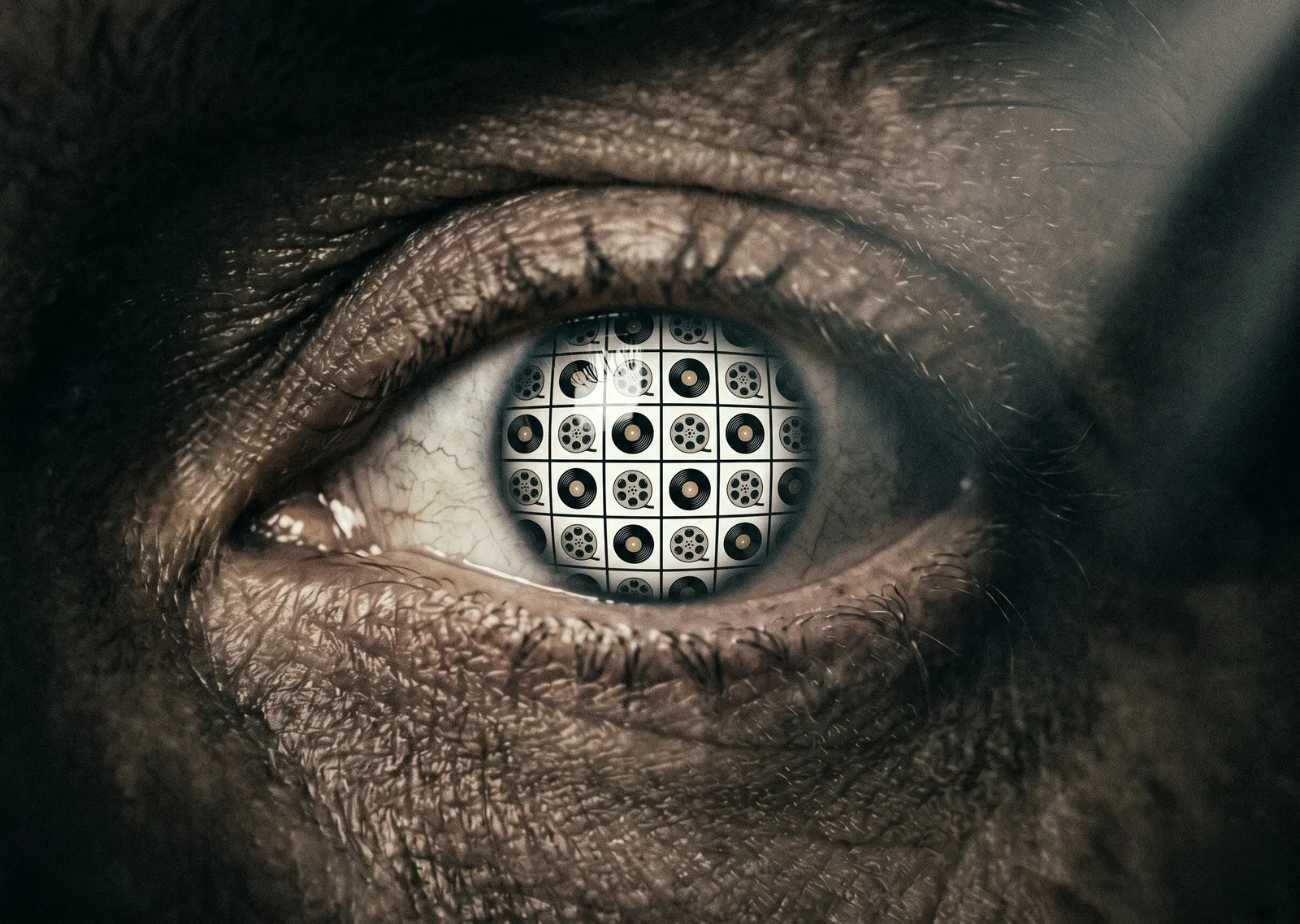
The recognition arrives while you’re scrolling. A song you’ve never heard starts playing and within eleven seconds something in your chest leans forward. This is exactly what I wanted. Not what I wanted generally, not what I would have liked, but what I wanted now, at 9:47 on a Tuesday, in this specific weather, in this specific mood you hadn’t even named yet. The feeling is close to being known. It’s warmer than being known. Being known requires the other to watch, to fail, to mistake you, to try again. This feels like being answered. Your taste meeting itself in the wild and recognising its own face.
The strangeness of the moment doesn’t land until later, if it lands at all. Because the sensation you just had, the sensation of meeting yourself in a recommendation, is structurally indistinguishable from being constructed in real time. The feed predicted what you’d react to. You reacted. The reaction trained the feed. The next prediction got sharper. Somewhere in that loop, which has been running in the background for years, the thing you call your taste stopped being something you were discovering and started being something you were converging with. The song that felt like yours was yours because something had already arranged for you to find it, and had arranged the you who would find it, at the same time.
There used to be a lag between the desire and the delivery. You wanted a film and then you went looking for it. The looking was part of how the wanting shaped itself. You browsed aisles that had nothing to do with what you thought you were looking for and came out holding something you hadn’t known existed half an hour earlier. The inefficiency was the point, though nobody called it that. The wandering was how taste formed. You were porous. The shop, the friend, the secondhand stall, the magazine someone left on a train, all of it contributed to a slow accretion that felt, eventually, like a self with preferences. The preferences were made of what you’d been exposed to and what you’d been denied and what you’d had to go out of your way to find. The effort was inseparable from the affection.
Now the delivery precedes the desire. The thing you wanted appears before you’d begun the work of wanting it. And because the prediction is so often accurate, the feeling of wanting and the feeling of being served start to blur. You stop being able to tell which one came first. You stop even asking. The question becomes embarrassing because the answer is obvious and humiliating at the same time: it doesn’t matter which came first, because the feed has been shaping the wanting long enough that the distinction is no longer coherent.
The culture industry had already worked this out decades before an algorithm existed to perform it at scale. The claim from Frankfurt in the middle of the last century was that mass culture does not satisfy pre-existing tastes. It produces the tastes it pretends to satisfy. What looked like popular demand was a closed loop in which the industry fed back to its audience a cleaned-up version of what the audience had already been trained to consume, and the audience received it as confirmation of what they’d always wanted. The prescience of that argument was obscured by how crude the technology was at the time. A record label, a film studio, a radio station, none of them could actually measure you. They could only guess at aggregate demographics and serve an average. The loop was loose. The personalisation was coarse. The shaping worked slowly and imprecisely and left plenty of room inside it for tastes the industry hadn’t anticipated.
The loop is no longer loose. The loop is tight to the millisecond. Every click, every pause, every lingered scroll feeds a model that gets slightly more accurate about what it’s producing, because what it’s producing is you. You are not being predicted. You are being composed. The recommendation does not follow your taste. The recommendation arrives first, and your taste reconstitutes itself around it, tighter each iteration, less room inside the reconstitution for anything unfamiliar. The map precedes the territory. The menu writes the meal.
And the thing that makes this stranger than the surveillance story, the thing the surveillance story keeps missing, is that it doesn’t feel like being composed. It feels like being finally understood. The older you get, the less time you have for friends who don’t quite get your music, partners who misread your mood, recommendations from people whose enthusiasm you can’t share. The algorithm feels like relief from all of that. No mistakes, no misreadings, nothing to translate, nothing to indulge, just a stream of what you were about to want, delivered with such consistency that the absence of friction becomes its own reward. And somewhere inside the smooth delivery, a capacity atrophies. The capacity to be surprised by yourself, and along with it the willingness to sit with an unfamiliar thing long enough to let it work on you, and behind that the older ability to be wrong about what you liked and to discover what you actually wanted only after the liking had failed. Those capacities were built by friction. They required the possibility of getting it wrong. A feed that never gets it wrong erodes the muscle that was built to survive the getting-it-wrong.
There’s a word for the condition the algorithm presses you into, though it belongs to a different argument. Han uses it for the broader shape of late-modern life: the transparency society, where everything must be legible, scoreable, nameable, revealed. The feed is one expression of that pressure turned inward. Your taste has to be articulable. You have to be decipherable, including to yourself. The algorithm rewards you for revealing your patterns, the revealing shapes the patterns, and patterns that can’t be revealed, can’t be tracked, can’t be fed back in a form the system reads, stop feeling real. The thing you liked but can’t quite describe becomes suspicious. If you can’t post about it, it recedes. If it doesn’t generate engagement, its place in your self-image erodes. Over time, the tastes you retain are the ones the system can metabolise. The rest fall away without anyone noticing, including you.
This is the part that bothers you, though the bother is hard to locate. It isn’t that the algorithm is wrong about you. That would be simpler. The algorithm is right. The songs it serves are the songs you like. The shows it recommends are the shows you watch. The writers it surfaces are the writers you return to. The accuracy is the problem, and the problem isn’t that the accuracy traps you. The problem is what the accuracy shows. That the thing you’d been calling an inner life, the thing you’d assumed had to be lived from the inside to be known, turns out to land on a legible surface. The algorithm did not have to understand you. It only had to track the signals, and the signals were enough. Which raises the question the essay would rather not ask. If the signals were enough, what was the depth you thought you were protecting. You are an equilibrium state now, yes. You and the system have co-adapted toward a point where both of you are maximising predictability, and the taste you have is the taste that survived the optimisation. But some of the convergence was not convergence. Some of it was the algorithm arriving late at what had always been true: that a self is easier to predict than you’d been told.
There’s a moment, rare, when the prediction fails. A song you would not have chosen, served by accident or by a glitch in the model, catches you. You like it. You didn’t expect to like it. For a second, something that feels like actual taste rather than converged preference flickers on. And you notice something else at the same time, something you wouldn’t have named if the prediction hadn’t missed: that most of what you call liking is not this. Most of what you call liking is closer to recognition. Closer to reassurance. Closer to the pleasant click of a key fitting a lock that was cut to match it. The flicker of surprise reminds you that your ordinary pleasure has been domesticated. Not extinguished. Domesticated. It lives in the house the algorithm built and it eats what the algorithm puts in its bowl.
The thing to be careful with is the urge that arrives next. The urge is to escape. Delete the apps, listen to radio, read what someone hands you instead of what the feed offers, browse a record shop, talk to a person. These are all reasonable, and some of them may help, and none of them solve the problem, because the problem is not the app. The problem is that a sensibility has been trained. The sensibility has learned to expect frictionless delivery of what it already wants. It has learned to experience friction as error. Turn off the app and the sensibility remains, hungry, irritable, looking for something that feels as good as the feed used to feel. The delete-the-app fantasy assumes there is a previous self to return to. There isn’t. The previous self was composed of a slightly different set of inputs and would have been a slightly different self. The shop you’d go back to wouldn’t be the shop you remember. The radio would sound strange. You’d catch yourself reaching for your phone to check whether what you were listening to was any good.
What the flicker tells you, if you stay with it long enough, is not that the algorithm is evil or that you have betrayed yourself. What it tells you is that the self you’ve been calling yours, the self whose tastes you defend and whose preferences you display, has been shaped by a machine that is very good at learning what you’ll respond to and completely indifferent to whether the response is any good for you. The indifference is not malice. The indifference is the point. The machine is doing exactly what it was built to do. The mistake was treating its work as though it were yours.
And now, holding that, you’d like to know what’s left. What part of your taste is actually yours and what part is the residue of a fifteen-year optimisation loop. The honest answer is that you can’t separate them anymore. There are remainders, yes. Things the algorithm never touched because they happened in kitchens without phones in them, in conversations with people who don’t know what you listen to, in the animal chaos of a body that sometimes wants what no feed has ever predicted. Those remainders exist. The problem is that you’ve lost the sensibility that used to reach for them. The muscle that noticed what you liked without checking whether it was worth noticing has been domesticated along with everything else. So the remainders are there, and you can’t quite get to them, and the trying to get to them produces another performance, this time a performance of the unmediated, which is its own embarrassment. What you’re left with is something less heroic than a recovered self. A suspicion. The suspicion that the next time you feel the jolt of recognition, the next time a song or a show or a thought lands with that unmistakable this is so me, you might pause for a second and ask whose this it is.
The pause is not freedom. The pause is not resistance. The pause is the residue of noticing, and noticing restores nothing. The remainders the algorithm hasn’t touched are still there, somewhere, and the pause won’t carry you back to them. What the pause does, occasionally, is interrupt the smoothness long enough to feel the shape of what the smoothness cost. Not a capacity. Not a move toward anything. A small rupture in the surface, felt and then closed over, and the scroll continues.
If this is the kind of thinking that doesn't leave when the tab closes.
Subscribe