Only One Version of You Gets to Exist
On the massacre that personality requires, and the selves that didn't survive the edit.
On the massacre that personality requires, and the selves that didn't survive the edit.
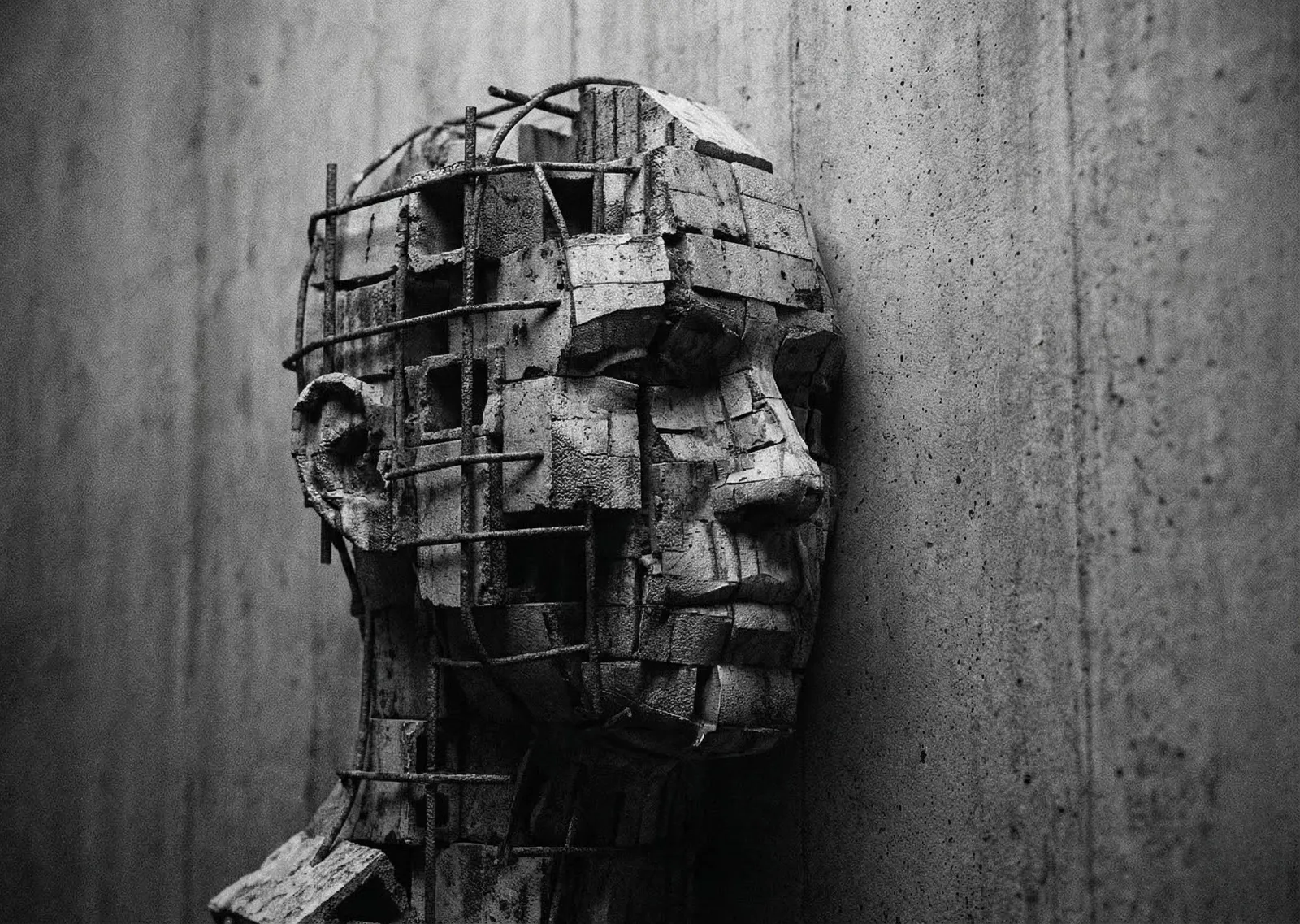
At some point, and no one remembers exactly when, a decision got made. One version of a person was allowed to continue. The others were not. It wasn’t dramatic. It wasn’t even conscious. It was more like a slow zoning decision, municipal and bloodless, where one version of a child got the building permit and every other version got demolished to make room. The version that learned how to sit still in a classroom. The version that stopped crying when told to stop crying. The version that figured out what kind of face to wear in the kitchen when the mood in the house shifted. That version survives. Not because it was the truest or the most alive, but because it was the most functional. The others didn’t die, exactly. They got archived. Filed away in a basement that nobody visits, in a building that officially doesn’t exist.
And the surviving version is good at its job. Staggeringly good. It knows which register to speak in before the first word leaves the mouth. It reads rooms the way a card counter reads decks, fast and below the threshold of anyone else’s awareness, calibrating warmth, adjusting posture, selecting the version of a laugh that will land with this specific audience. This is not dysfunction. This is what decades of optimisation produce. A self so well-adapted to its environment that the adaptation has become the self, the way a vine becomes indistinguishable from the thing it grew around. The problem is not that this works. The problem is that this works so well that no one, least of all the person inside it, can locate where the adaptation ends and the person begins.
Jung gave this a name but the name is too clean for what it describes. Persona. The word suggests a mask, and masks can be removed. What Jung was actually mapping was something closer to a skin graft. The persona doesn’t sit on top of the face. It fuses with it. The tissue merges. And then someone, a therapist, a lover, a question asked at the wrong time of night, tries to peel it back, and what comes away is not a mask but living tissue, and the pain is real, and the person underneath is not sure they exist independently of the thing being removed. This is not a metaphor that resolves into insight. It is a description of something that happens in the body when the constructed self is threatened. The chest tightens. The throat closes. The organism responds to the removal of the persona the way it would respond to an attack, because at the level of the nervous system, there is no difference. The self that was built to protect has become the self that is being protected. The perimeter ate the interior.
Most people feel this without having language for it. They describe it as “not knowing who I am” but what they mean is more specific and more frightening than that. They mean that every version of themselves they can access feels like a performance, and they have looked behind all the performances, and there is no one back there running the show. The greenroom is empty. The actor and the role have merged so completely that removing the role doesn’t reveal an actor. It reveals an absence shaped like one.
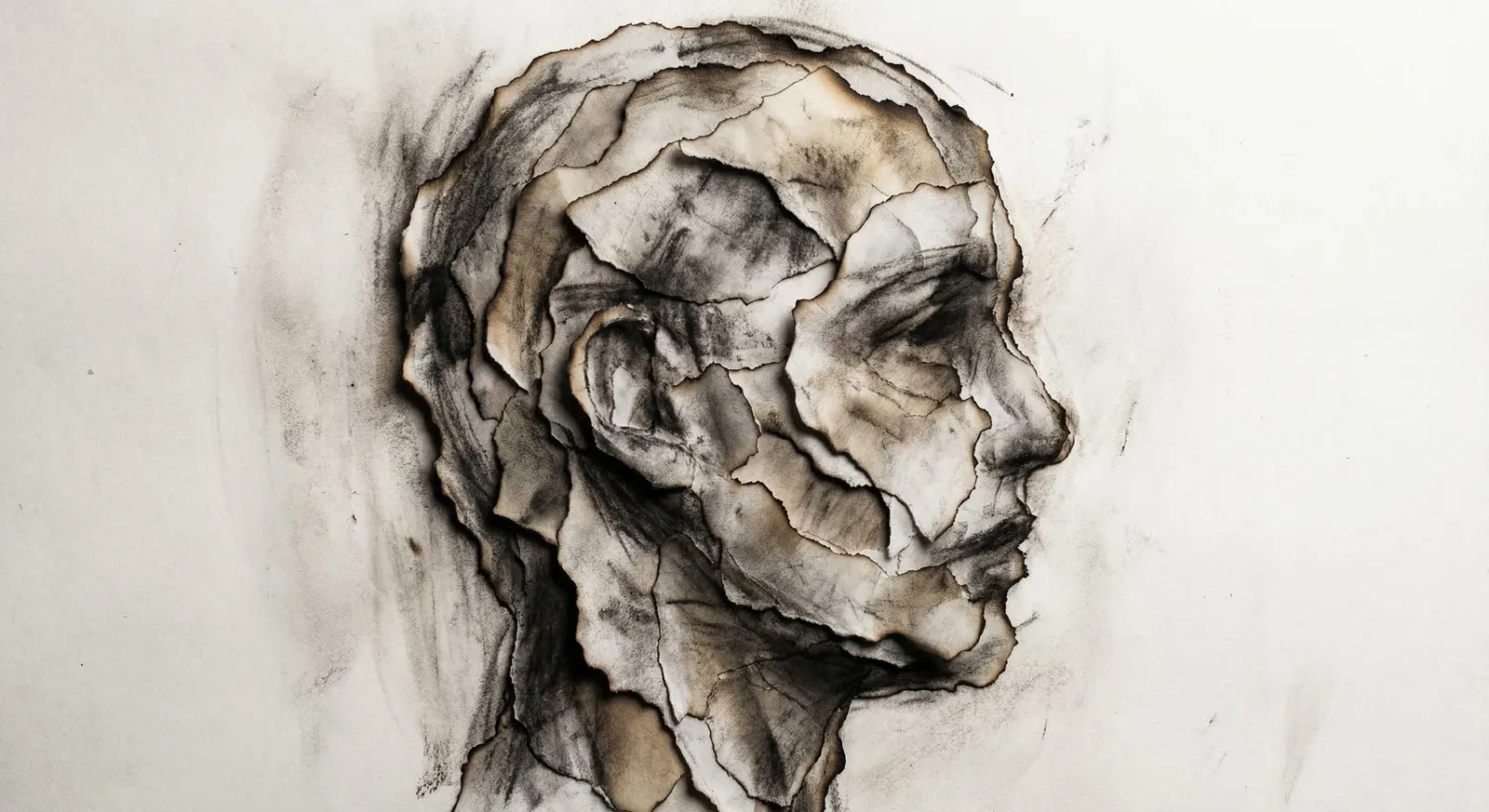
Winnicott saw this from the clinical side and gave it a name that sounds gentler than it is. The false self, he said, is the self that develops to protect the true self from an environment that cannot receive it. Protection. That’s the word he chose, and it’s doing a lot of work, because what he was describing is closer to replacement than protection. The false self doesn’t stand guard. It takes over. It goes to work. It falls in love. It raises children. It builds a life, brick by brick, room by room, and the true self, whatever that was, sits somewhere underneath, not dead but not participating, watching its own existence be lived by something that was installed to keep it safe. Think about that for longer than is comfortable. Not that a person has been wearing a mask. That the mask has been doing all the living. That the mask chose the career, married the partner, decorated the house, held the babies, and the thing it was built to protect has been pressed against the glass the entire time, watching all of it happen in its name, unable to touch any of it.
There is a temptation here to make this sound fixable. To suggest that somewhere underneath the accumulated adaptations there is a true self waiting to be excavated, brushed off, restored to its original condition like a painting under centuries of varnish. The self-help industry runs on this premise. Be authentic. Find your voice. Peel back the layers. As if the self were a lost dog and the problem were simply a matter of looking harder, calling louder, checking behind the correct buildings. But this is not a rescue story. The versions that got cut, the ones that were too loud or too soft or too hungry or too strange, are not waiting in a locked room. They were not preserved. They were metabolised by the one that survived them. Used for parts. And what remains is not a hidden truth but a composting process that has been running for decades, turning everything that was discarded into fuel for the thing that replaced it.
This is where the essay would like to offer something. A way through, a reframing, a suggestion that even recognising this pattern constitutes some kind of progress. And maybe it does. But the recognition itself is suspect. Because the self doing the recognising is the same self that was built by the editing process, and it has no access to what was edited out, and its account of its own construction is necessarily partial, necessarily told from the perspective of the survivor, which is to say, the one version that had a reason to believe its own story. The performance doesn’t know it’s a performance. That’s what makes it a good one.
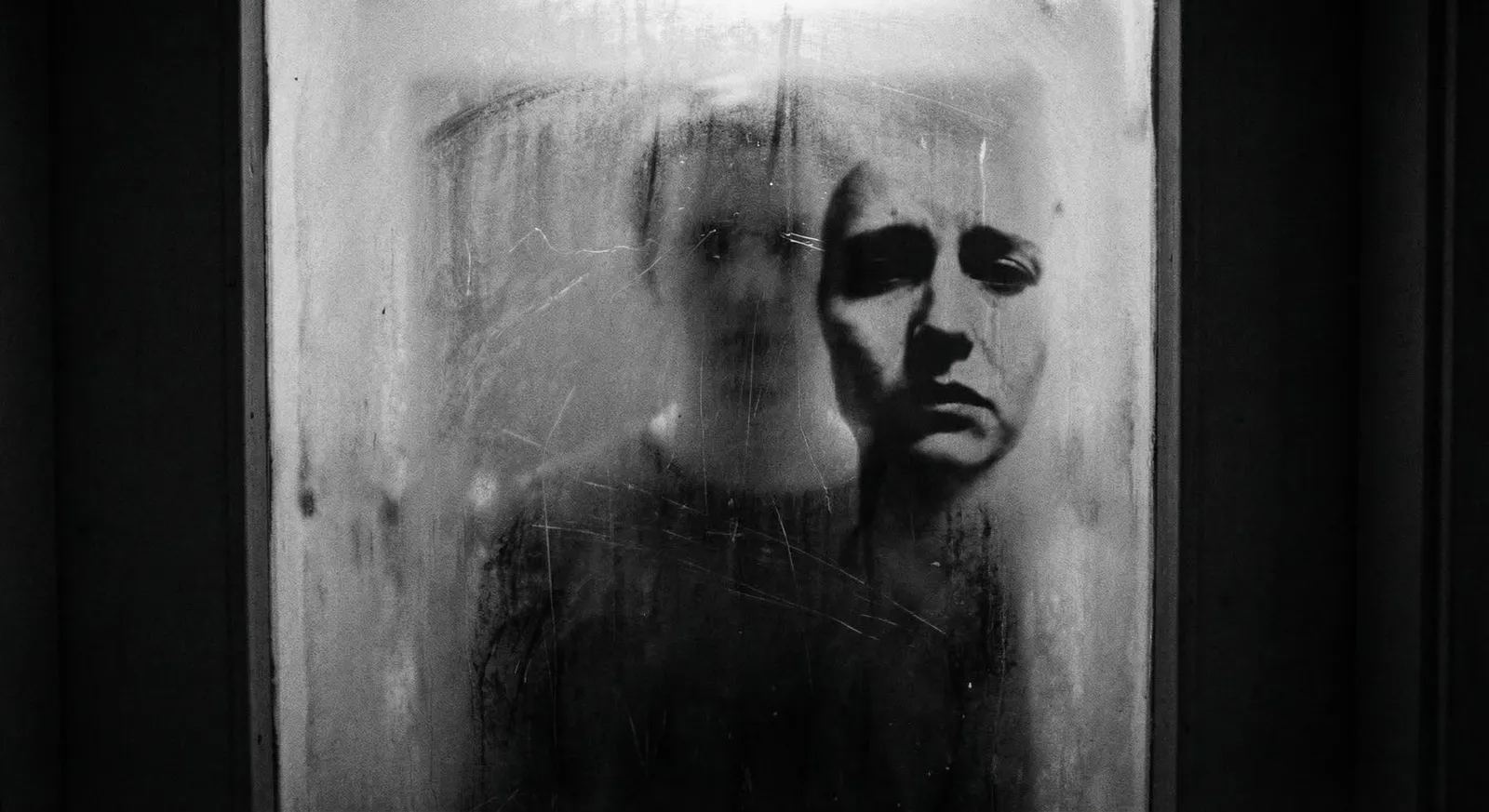
Goffman understood that the performance is not a layer on top of reality but the mechanism by which reality is produced. Impression management is not something people do in addition to being themselves. It is the process by which a self gets made. Every interaction is a negotiation between what a person is willing to show and what the room is willing to receive, and the self that survives this negotiation is not the truest but the most legible, the one that can be read without friction. And this negotiation happens thousands of times, in thousands of rooms, over thousands of days, until the negotiated self is the only self available. Not because the others were killed off. Because they were never reinforced. The muscle that was never used atrophied. The one that was never welcomed stopped arriving. The door was never locked. It just stopped being opened.
People feel this most sharply in transitions. Not because a divorce or a redundancy or a death creates an identity crisis, but because it removes the scaffolding that was holding the constructed self in place. The job was a role. The marriage was a mirror. The routine was a rhythm that substituted for something deeper. When the structure falls away, what’s left is not a person. It’s a gap shaped like one. An outline where the person was supposed to be, filled with nothing but the residue of having been performed for so long that performance and personhood became the same substance.
What Heidegger called thrownness applies to the interior as much as the exterior. No one chose which version of themselves would survive the editing process. No one sat down at eight years old and made a strategic decision to kill the playful one and keep the compliant one. It happened the way weather happens. Pressure systems moved through the household and the organism adapted, and the adaptation hardened, and now here stands a person who can’t remember what they wanted before they learned what was wanted from them. And the not-remembering is not a gap in memory. It is the memory. The forgetting is the architecture. The person was built from the things they learned not to be, and the foundation is made of absence, and the whole structure holds up disturbingly well for something constructed entirely out of what was not allowed.
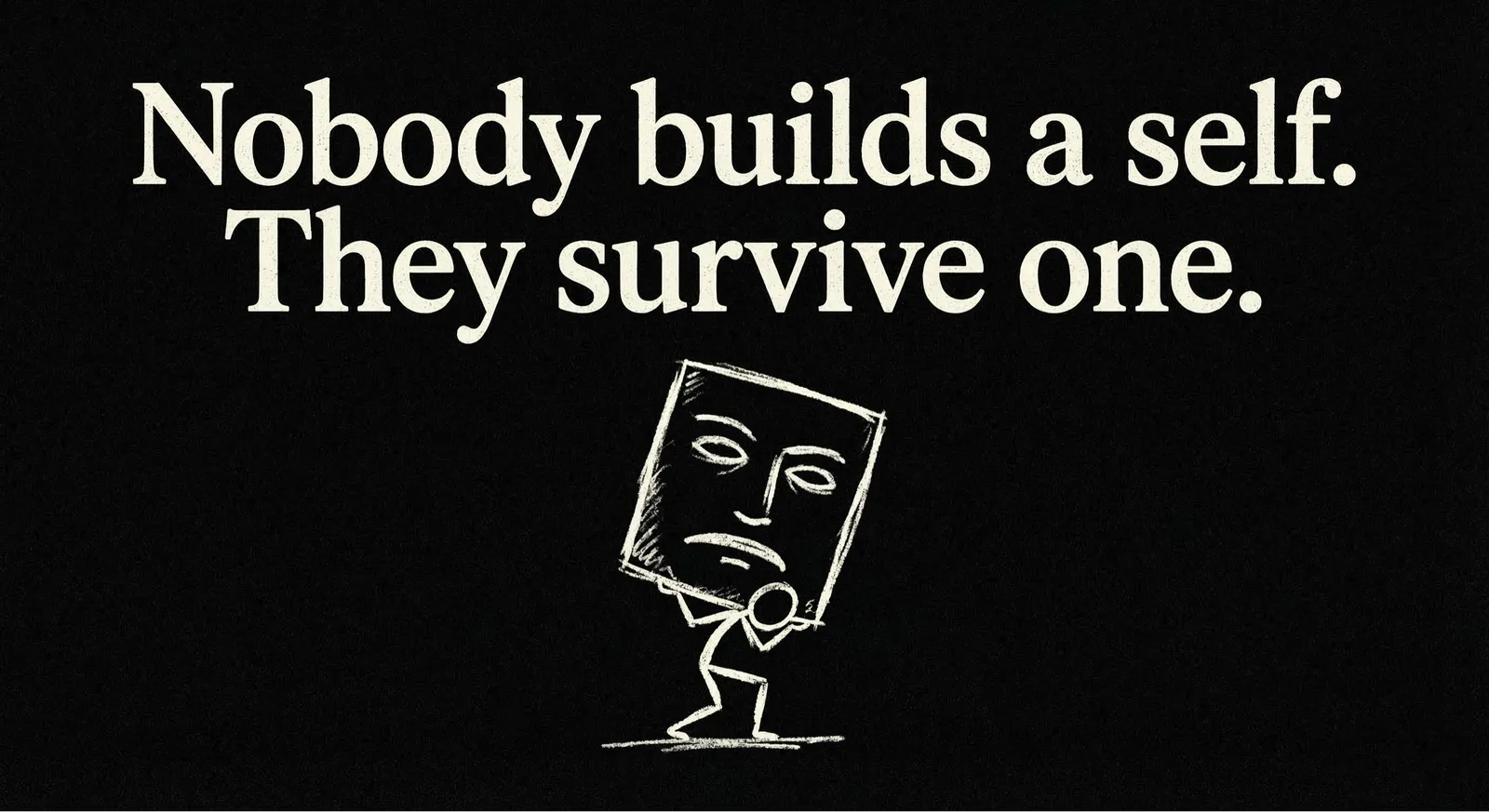
Nobody builds a self. They survive one. And the surviving version stands here now, reading this, doing what it does best, looking for the part of the description that applies to someone else.
If this is the kind of thinking that doesn't leave when the tab closes.
Subscribe