The Guilt of the Unlived Life
The versions of you that died so the current version could exist are still making their claim. The debt has no discharge mechanism.
The versions of you that died so the current version could exist are still making their claim. The debt has no discharge mechanism.
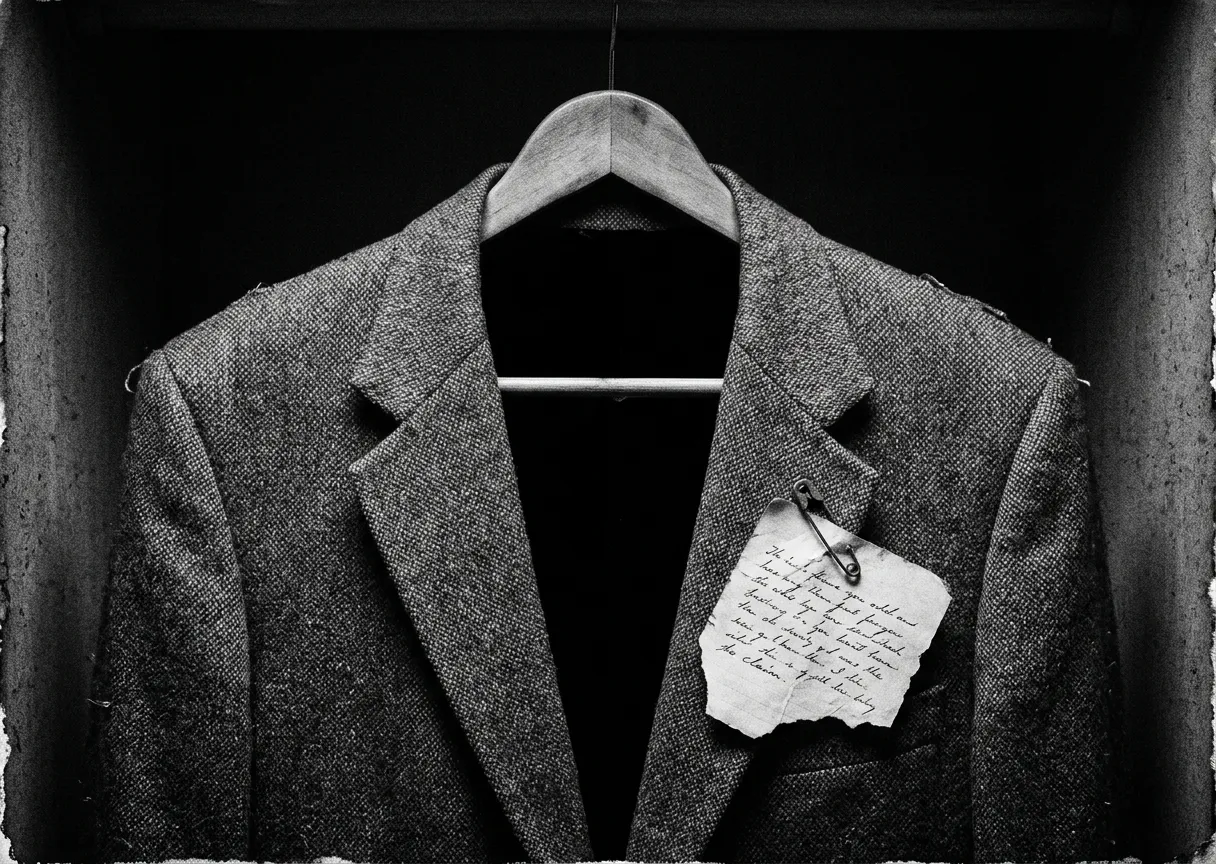
Sometimes it comes at four in the morning when the house is still and the day hasn’t started demanding its shape from you yet. Sometimes it comes in the middle of a conversation you’re competent at having, or halfway through a task you’ve done so many times your hands could finish it without you. A flicker. Not a thought exactly. More like the sensation of someone standing behind you who isn’t there, someone wearing your face but living in a body that took a different turn, and when you almost catch them in your peripheral vision the feeling isn’t curiosity. It’s guilt. Sourceless and unearned, as though you’ve done something terrible to someone you can’t name, and the terrible thing was becoming the person you are instead of the person you were going to be.
Most people recognise this and then immediately find somewhere else to put their attention. It passes. The shape reasserts itself. But the fact that it passes doesn’t mean it leaves, and the fact that it’s brief doesn’t mean it’s small.
Rollo May called it the guilt of the unlived life. The phrase doesn’t comfort. It just names something that sits underneath the functional surface of a life that works. The guilt isn’t about something you did. It’s about the versions of you that never got to exist, and their non-existence isn’t accidental. It’s the direct consequence of every narrowing, every moment where the self that was trying to emerge got overruled by the self that had already been built, and the built self won because the built self had a lease and people depending on its stability. The emerging self had nothing but a pull. And a pull, against all of that, is not enough.
What makes this different from regular guilt is the absence of a discharge mechanism. Regular guilt follows an act, which means it can be addressed by another act. You apologise. You change. The debt has a creditor and a currency. Existential guilt doesn’t work like this because the debt isn’t to a person or a principle. The debt is to a version of yourself that you extinguished by becoming the version you are, and you can’t repay it without first un-becoming the person who took their place, and un-becoming that person would mean dismantling the relationships and the identity that other people have built their own stability around. The guilt is unpayable. Not because you lack the will but because paying it would constitute a different kind of destruction, aimed at different people, who did nothing wrong except believe you when you said this is who I am.
Lost possible selves is the term researchers use for this, and the findings are worse than the philosophy. The versions of you that were once live options and are no longer available, the person you would have been if you’d left, if you’d spoken instead of swallowing what you swallowed at twenty-three and kept swallowing for the next twenty years: these don’t fade. They persist in the self-concept with an emotional charge that has nothing to do with whether they could realistically be recovered. How often people return to them is predicted not by probability of getting them back but by how much the loss still matters. The version of you that died two decades ago can be as vivid and as insistent as the version that died last week. Time does nothing to this. The archive doesn’t close.
This makes sense if you stop pretending that choosing a life is the same as resolving one. The story people tell about commitment is a story of narrowing: you start wide and then you narrow until the narrowing becomes the life. The other options recede. But they don’t recede. They go underground, and the underground is not inert, and the selves you buried down there are not at rest.
Davidai’s research makes the mechanism clearer and crueller. People’s most enduring regrets, the ones that refuse to metabolise no matter how many years pass, cluster around failures of the ideal self rather than the ought self. Ought regrets are about duty: I should have kept my word, I should have been more present. These are painful but they’re actionable. People take steps. The regret processes and diminishes. Ideal regrets are about who you were supposed to become: I should have written the book, I should have left before the leaving turned into something contaminated by decades of not leaving. These don’t process because the correction isn’t an adjustment. It’s a demolition. You can’t become the person you should have been at twenty-five when you’re forty-four carrying everything the intervening decades attached to you. So the ideal regret takes up permanent residence in the gap between who you are and who you almost were, and it generates its guilt without interruption, because the only way to relieve it would be to unmake the life that, by any external measure, is working fine.
Kazimierz Dąbrowski spent his career as a psychiatrist arguing that this kind of crisis is not dysfunction. His theory of positive disintegration proposes that the personality you inherit, the one assembled from parental expectations and the cultural scripts that told you what a life should look like, has to fracture before anything real can replace it. The anxiety and the guilt with no return address: these aren’t symptoms. They’re signals. The inherited structure has hit its limit. Something is trying to grow through the cracks.
But the version of Dąbrowski that treats this as good news is a version that hasn’t sat with the theory long enough. Disintegration can be positive and it can be total. People who let the structure fall don’t always reassemble. Sometimes they lose the marriage and the network of people whose own lives were resting on the shape that just collapsed. What comes out the other side isn’t always a more developed personality. Sometimes it’s wreckage, and people you love are standing in it wondering what happened to the shape they were counting on. Dąbrowski knew this. The theory doesn’t promise transformation. It describes a process that can produce transformation and frequently produces ruin instead, and the difference between the two outcomes is not fully within anyone’s control.
So the person lying awake at four in the morning, feeling the pull of the unlived life against the walls of the life they actually built, is facing something that refuses to behave like a choice. Hold the shape and carry the guilt. Or let the shape break and risk a destruction that radiates outward into the lives of people who didn’t sign up for your crisis. The guilt of holding is slow and survivable. The guilt of breaking is immediate and might not be.
Most people hold.
Dąbrowski would call this primary integration: the personality that survived intact because the person chose not to let it fall apart, or simply couldn’t. His framework would suggest that the holding is itself a form of developmental arrest. That the adjusted self, the self that found a way to live with its own foreclosure, is not a self that developed but a self that successfully avoided the conditions under which development might have occurred. The guilt of the unlived life, in this reading, is the sound of a disintegration that was refused. A collapse that was survived not by going through it but by building a thicker wall against it.
Susie Scott, writing from sociology, calls the unlived versions of the self “the underdogs of social selfhood.” The lived life gets storied, gets narrated and shaped into something coherent. The unlived life gets nothing. No narrative and no frame that would make the weight of it bearable. It exists as presence without account. Felt in the body as a chronic, low-grade wrongness that doesn’t rise to crisis and doesn’t sink to nothing. The person you didn’t become is in the room while the person you did become goes through the schedule, and nobody can see the first person except you, and even you can only catch them sideways, in the gap that opens when the doing stops and you have to sit with what’s left.
What I keep circling is whether the guilt is a malfunction or whether it’s the most accurate thing the psyche produces. Every life, no matter how well-chosen, is built on the bodies of alternatives. Every decision killed something that was trying to live. The dead selves don’t care that you had good reasons. They don’t care that the life you chose is loved and sufficient by any standard anyone else would recognise. They only know they didn’t get to exist, and their non-existence happened inside your body, on your watch, and the fact that your consent was mostly unconscious and mostly coerced by circumstances you couldn’t see at the time doesn’t make it feel less like a betrayal when the house goes still and the flicker catches you again.
The temptation is to turn this into a call to action. A sign you should change your life. A signal from your “authentic self,” whatever that means when the self has been under construction since birth and none of the blueprints were yours. But the guilt doesn’t want action. It wants acknowledgment. It wants the person you became to stop pretending the person you didn’t become is gone, because they were never gone, and the fact that their world doesn’t exist doesn’t make their claim on you any less real.
What you do with a claim that can’t be paid and can’t be dismissed is you carry it. Not gracefully. You carry it alongside the love and the commitments that are real even though they’re built on the ground where someone who was also real didn’t get to stay.
The house is still. The flicker comes. You already know who it is. You’ve always known. That’s the guilt. Not that you forgot them. That you didn’t.
If this is the kind of thinking that doesn't leave when the tab closes.
Subscribe