What If There's Nothing Behind the Mask?
On persona, the performed self, and the identity that was never yours to begin with
On persona, the performed self, and the identity that was never yours to begin with
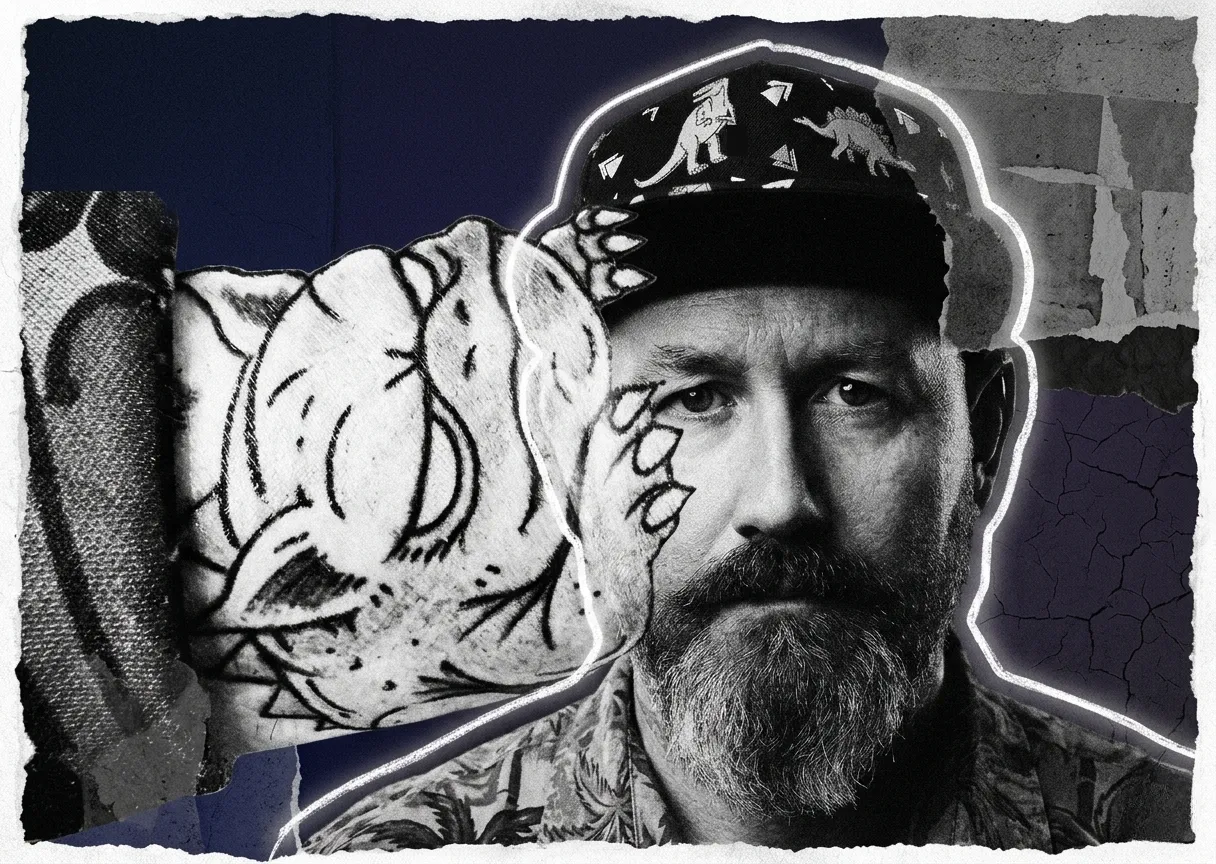
The face you wore to the job interview in 2007 is still on. Nobody told you. You didn’t notice. It fit so well that the muscles underneath stopped knowing they had another shape, and now the interview is over and the job is over and the years have piled up behind a face that was only supposed to last an afternoon, and the face keeps doing what it was made to do, which is hold.
Jung called it the persona, and his own framing of it was sharper than most of the paraphrases that have followed. The persona, he said, was a compromise between the individual and society about what a person should appear to be. A face designed, in his own words, on the one hand to make a definite impression on others, and on the other to conceal the true nature of whoever was underneath. He borrowed the word from Roman theatre, where actors wore fixed expressions so the audience could identify the character from a distance. The metaphor has aged well, possibly too well, because it lets people believe the problem is that they sometimes wear a mask and could, with enough effort, take it off. As though there is a drawer somewhere with the real face in it, waiting. As though the mask is something separate from the thing it has been pressing against for thirty years.
What Jung was less careful to spell out, and what people rarely want to hear, is what happens when the persona is not worn but fused. When the mask stops being a strategy and becomes the face. When the system of adaptation that was supposed to help someone survive social life starts running the entire operation, and the person behind it, the one who was supposed to be adapting, stops developing because there is no room left. Not suppressed. Not hidden. Never built in the first place. The way a muscle never grows if it’s never used, except the muscle in question is the capacity to know what you want when nobody is watching.
Watch someone at a dinner party explain, in the voice they use for dinner parties, that they’ve recently started doing the work of being more themselves. They will use the word authentic. They will mean it. The voice will not change. The posture will not change. The careful arrangement of anecdote and vulnerability and just enough self-deprecation to seem approachable but not weak, none of it will shift. Because the performance of having removed the mask is itself a mask, and a more sophisticated one at that, because this one has learned to narrate its own removal. It’s like watching someone escape a locked room and walk straight into an identical room while announcing they’re free.
Goffman didn’t bother asking whether the performance was real or fake. He argued the question was wrong. The self, for Goffman, is the performance. Not a thing behind the curtain but the curtain itself, and the stage, and the lighting, and the way someone angles their body when they know they’re being looked at. There is no backstage. There is no moment where the real person steps out and stretches. And the disturbing part isn’t the theory. The disturbing part is watching yourself for a week after reading it and not being able to prove him wrong. You wait for the moment when you stop performing and it never arrives. You’re performing in the shower. You’re performing alone at two in the morning. Not for anyone. For the version of yourself that has come to expect a certain kind of person to be here, and gets uneasy when the script goes blank. The audience is internal. It always was.
Heidegger saw this from a wider angle. Das Man, the They, the anonymous public self that prescribes how one should think, feel, react, grieve, celebrate, and die. Not a conspiracy. Not an imposition. The natural consequence of being thrown into a world that was already decided before you arrived. The They doesn’t demand conformity the way a dictator demands it. It offers a version of existence that is so available, so pre-interpreted, so ready to wear that choosing anything else requires an effort most people don’t know they’re not making. You read what they read, find shocking what they find shocking, measure your life by the metrics they’ve agreed constitute a life, and you do all of this while believing you’re choosing. The self isn’t stolen. It was never assembled. The kit arrived pre-built and nobody mentioned there were other options.
And the absorption, for Heidegger, isn’t occasional. It’s the default state. The They is not something you fall into during weak moments. It is the water you’re already swimming in, and the concept of swimming is itself something the They taught you. Even the desire to be different from the They, to stand out, to reject conformity, arrives in forms the They has pre-approved. Rebellion has a uniform. Nonconformity has a brand. Opting out is a lifestyle category with its own subscription model.
This is where Jung and Heidegger converge on something neither of them framed directly but which sits at the centre of both their warnings. The mask isn’t the problem. The problem is that taking it off requires a face, and the face requires a self, and the self requires conditions that the mask has been preventing for as long as the mask has existed. You can’t remove the scaffolding when the scaffolding is the building. There was supposed to be a building. The scaffolding was supposed to come down. But the scaffolding got painted and furnished and someone hung pictures on it and now it has a mortgage and a reputation and a LinkedIn profile, and the building was never built because all the resources went into making the scaffolding look permanent.
The shadow, in Jung’s framework, is everything the persona pushes aside. The cruelty, the pettiness, the cowardice, but also the tenderness, the wildness, the appetites that the mask has no slot for. What gets less attention is that the shadow isn’t always a basement full of repressed material. Sometimes it’s an empty room. The door is locked not because something dangerous is inside but because nothing is, and that nothing is more frightening than any monster, because at least a monster confirms there was something to repress.
Winnicott drew a similar line with different tools, but the place it leads is harder to look at. His false self wasn’t a villain. It was a caretaker, a system that formed early to protect whatever was too raw, too unformed to survive without a shell. And the caretaker was good at its job. Too good. Good enough to run the whole life, handle the relationships, build the career, get the promotion, accept the compliment, say thank you and mean it, or perform meaning it so well that the difference stopped being detectable even from inside. You know the feeling of saying exactly the right thing at exactly the right moment and feeling, as the words leave, that they belonged to someone else. Of being praised and not knowing where to put it, like receiving a package addressed to someone who lives at your address but isn’t you. The competence is real. The results are real. The person producing them is a question that nobody, including the person, has thought to ask.
Here is where the recursion gets savage. When the mask stops working, when the symptoms start, the bad moods, the compulsions, the drinking, the eruptions over nothing, the inability to be in a room alone, the mask’s only move is to explain the disruption in its own terms. It will call it stress. It will present a plan for managing it that involves more of the same behaviour that created it. Asking the mask to diagnose the problem is asking the disease to write the prescription. And the prescription will always be: more mask. A better mask. A mask that incorporates the failure of the old mask into a story about personal evolution. The upgrade cycle of the self, planned obsolescence included.
People spend fortunes and decades searching for the thing behind the mask, and the search has its own industry, its own vocabulary, its own conferences with lanyards. The pitch is attractive because it assumes the self you’re looking for is already there, intact, waiting to be uncovered. Like archaeology. But what if the mask isn’t covering something? What if the mask, over decades of wear, has become the face, the way a path through grass becomes a ditch if enough people walk it? The search itself starts to function as another mask, one that lets you believe there’s a destination while you keep walking. You can spend a lifetime looking for yourself and the looking becomes the performance and the performance becomes the life and the life has the shape of someone searching, which is at least more interesting than the shape of someone who stopped.
Heidegger said that anxiety, the real kind, not worry about deadlines but the groundless unease of a self encountering its own emptiness, fetches Dasein back from its absorption in the They. It breaks the spell. It makes the familiar suddenly strange, makes the routines feel like someone else’s furniture in someone else’s house. The experience isn’t pleasant. It isn’t meant to be. It’s meant to be disorienting enough that the mask slips for long enough to feel the air on whatever is underneath. But Heidegger was honest enough not to promise what you’d find there. He gave you the disruption and then left you standing in it, which is either the most rigorous thing a philosopher has ever done or the cruellest, and the answer probably depends on whether you’ve felt it.
Laing called the chronic version of this ontological insecurity, and the name is clinical but what it describes isn’t. It’s the condition of a self that is not sure it exists in the way it needs to in order to feel real. Not a delusion. A structural wobble at the centre of a person who has spent their whole life being what was required, doing it well, being rewarded for it, and then one day finding that the reward has nothing to attach to. The reviews are in. They’re glowing. They’re all for someone who may or may not exist. The applause is warm. The dressing room has good lighting and a mirror and a chair. Nobody is sitting in it.
What makes all of this hard to write about without flinching is that it isn’t about anyone else. It’s about what it feels like to suspect that the thing you’ve been calling your personality is a committee decision you were never invited to. To sit in a room and wonder which version of the silence is yours. The mask didn’t form in malice. It formed in survival. And the survival worked. And the working became the life. And now the life has the shape of the mask and the mask has the weight of a life, and the two are so entangled that separating them would require a violence that might not leave anything standing.
There’s a room at the back of this. Small, cold, light coming in from somewhere you can’t identify. You’ve been locking it because you assumed something terrible was inside, and now the lock is off and the door is open and there’s a room.
You stand in it. You don’t know whose it is. You don’t know if that’s the worst part or the only honest thing that’s happened in years.
If this is the kind of thinking that doesn't leave when the tab closes.
Subscribe