Breaking Free From the Herd: The Loneliness on the Other Side
Leaving the crowd was supposed to deliver you to yourself. It delivered you to how little of you there was.
Leaving the crowd was supposed to deliver you to yourself. It delivered you to how little of you there was.
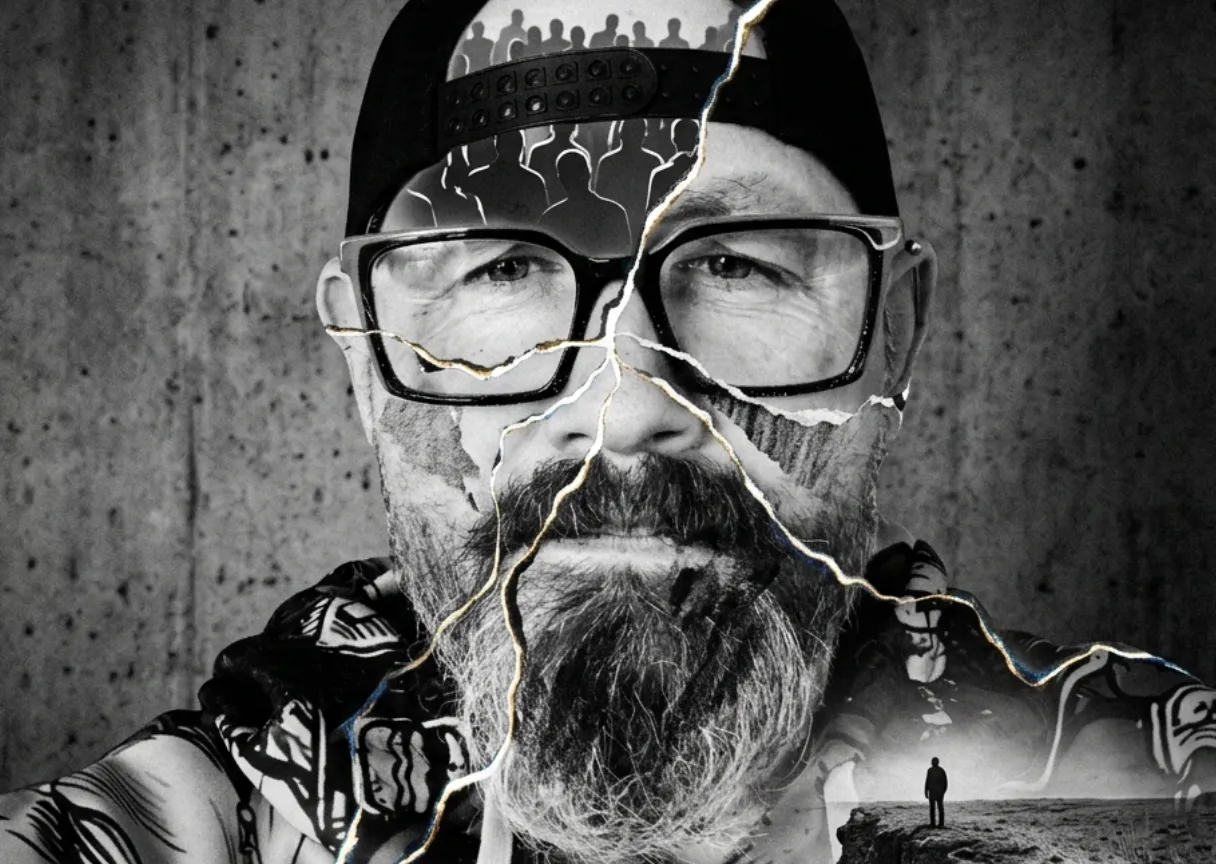
Breaking free from the herd is the one move every story about selfhood agrees on. Leave the crowd, stop performing the borrowed life, and the real you is supposed to be waiting on the other side. What that story leaves out is the loneliness that arrives instead, and how it refuses to behave like a phase you pass through. It behaves like a destination. Pulling away from the herd does deliver you somewhere. It just rarely delivers you to the self the leaving was supposed to be for. More often it delivers you to the cold discovery of how much of that self had been the herd all along, speaking through your mouth while you took the credit. This is what leaving the crowd costs, and why the freedom feels so much like exile.
The herd never looks like a herd while you are standing in it. It looks like agreement, like the obvious way to live, the way to hold a fork that nobody taught you and nobody questions. By a certain age you are meant to want certain things, and you do. Someone asks how you are and the mouth says fine before you have been consulted about it. You are not following anyone. You are doing what one does. And the strangeness sitting underneath doing what one does is that there is no one doing it. The decisions arrive already made. The opinions are waiting in the cupboard, folded, your size.
Heidegger had a name for the one who lives this way, and the name was nobody. Das Man. The They. Not a crowd you could point to across a room but the faceless authority that has already settled, before you open your eyes in the morning, what is worth wanting and what is embarrassing and how loud to laugh and when to stop. We mostly are this. For most of the hours of most of the days, the self that gets up and answers to your name is a delegate the They has sent to keep your seat warm. And it works. That is the detail the leaving stories cannot afford to keep in. It works so well you take it for your own life. The herd is not a cage. It is a kindness with terms you never read, and the terms are only ever read later, alone, after the kindness has already been refused.
When you leave the crowd, far less of you remains than the promise implied. You stop laughing at the thing everyone laughs at. You hold up the wanting you were handed and find it weightless in the palm. The truer thing starts coming out in the smaller voice, and the faces around you close like shop fronts at dusk. There is a moment in this, brief and high, that feels like altitude, like you have climbed up out of something thick into thinner, cleaner air. The literature of leaving promises that this moment is a door. That on the far side of the crowd there is a clearing, and standing in the clearing, at last, unborrowed and entire, is you.
The clearing turns out to be real. The you is the part they got wrong. When the They stops speaking through your mouth, the silence that arrives is not the sound of your own voice finally coming through. It is the sound of how little was ever underneath the borrowing. You reach for the self all of this was supposedly in service of, the real one, the one the crowd was said to be crushing, and your hand closes on far less than the marketing swore was there. Some of it exists. A grain. Preferences that hold their shape when no one is watching them be held. But the bulk of what you had been calling yourself, the opinions, the ambitions, the entire performed apparatus of having a personality at all, turns out to have been on loan the whole time. The herd was not concealing you from yourself. The herd was carrying you. And you have set yourself down in an empty field only to find that your legs do not work the way you had assumed they would, having never once had to use them.
Leaving the herd produces loneliness rather than freedom because the rules it stripped away were also the things giving a life its measure. Durkheim went looking for what became of people when the rules that bound them came loose, and what he found was not freedom. It was a sickness with no organ to locate it in the body. Anomie, he called it, the condition of having no binding measure, no scale outside yourself against which a life could be weighed and found to be going somewhere. He was counting the dead while he worked this out. And he found that people let go of life most readily in the absence of pressure, when the threads went slack and nothing was asking anything of them anymore. The herd, for all its levelling, was always asking. Every morning it pressed a reason into your hand that you had not been required to manufacture yourself, and you spent that reason all day long without once noticing it had been a gift, the way you never notice spending air.
The loneliness waiting on the far side of the crowd gets sold to you as a phase. A dark stretch of road between the false life and the real one. Endure it, the story goes, and there is a someone waiting for you at the end. But the road may not arrive anywhere, and the loneliness may not be a corridor between two rooms but the room itself, the one you were always going to end up standing in the middle of, because the self was a thing that only ever happened between people, in the warmth and in the being answered when you spoke into it, and lifted out of that warmth it does not come into its own. It thins. It loses the heat it had been borrowing and forgets it was ever warm.
The version of you who left the herd can harden into a performance as rehearsed as the one you abandoned. This is the worse thought, the one that waits until three in the morning when there is no one left to perform composure for. That standing apart set, somewhere along the way, into a pose. The one who saw through it all. The one too fine-grained to be held by what holds everyone else without complaint. There is a vanity in exile that feels exactly like depth from behind your own eyes, and you cannot climb far enough out of your own skull to check which of the two you have been wearing this whole time. You walked out on the audience and carried it with you anyway. It lives behind your face now, a smaller and far more devoted crowd, applauding every refusal to need a crowd.
The herd starts to look different across this distance. From out here it stops resembling the thing you escaped and starts resembling the thing that has shut its door behind you. The people still inside it are not all fools sleepwalking through lives that were chosen on their behalf. They are warm. They are held by something. They answer to a name and the name is answered back, and in the answering a self gets built between them, steadier and more load-bearing than anything you have managed to assemble alone out there in your cold field of unborrowed opinions. And you begin to wonder, somewhere you would not say out loud to anyone, whether the strong thing was ever the leaving, or whether the strong thing was the staying that you were not able to do.
The herd does not stop calling you back. That is the part that finishes the job. It keeps your place. It would take you in again without once asking where you had been, because the They does not remember its own absences, only its members. And there are nights when you can feel the whole weight of it pulling at you, the old warmth of being decided for, the relief of setting the wanting back down into someone else’s hands. And you can no longer tell whether going back would be the surrender it would look like from out in the field, or the first honest thing you had done in years, the admission that you were never the solitary figure you had cast yourself as, only an animal that got cold and called the cold a kind of seeing. The field stays empty. The calling does not stop. You stand in the middle of the clearing you bled to reach, listening to it come at you across the dark, not moving, and not because you have chosen the silence over the warmth. Because you have stopped trusting the part of you that would be doing the choosing.
If this is the kind of thinking that doesn't leave when the tab closes.
Subscribe